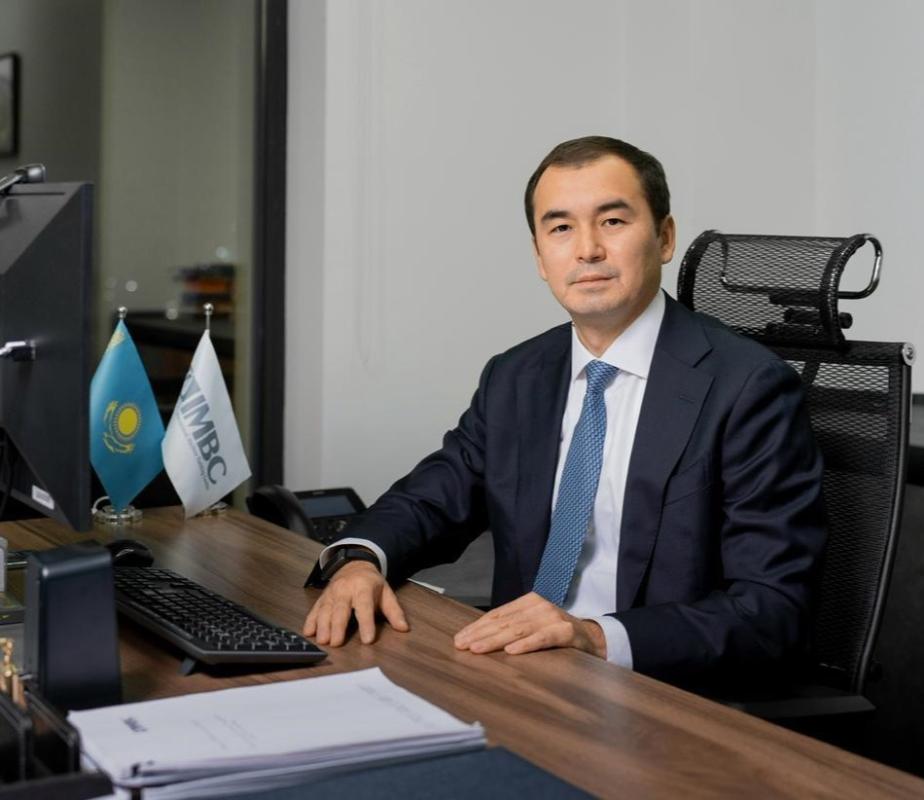
Dastan Abishev: Our main goal is to strengthen Kazakhstan's industrial independence
Today, industrial independence has become one of the main directions ensuring the economic stability of states. The global crises of recent years and logistical difficulties in international supply chains have clearly demonstrated how important it is to have a national production base in strategic sectors.
The oil and gas sector holds a special place for the economy of Kazakhstan. It is one of the main driving forces of the country's economy and an important source of state revenue. Therefore, ensuring the stable operation of oil and gas production is not just a sector-specific task, but a matter of national economic security.
From this point of view, the development of domestic production of oil and gas equipment and increasing the share of local content are becoming directions of strategic importance. Localizing production not only reduces dependence on imports but also strengthens the resilience of the national industry and increases the internal potential of the economy.
Global experience has long proven the effectiveness of such a policy. For instance, Norway successfully developed localization by widely involving local companies in major energy projects, thereby forming a powerful national industry. For Kazakhstan, such models serve as an important guide for economic diversification and strengthening industrial independence.
IMBC – The Core of a New Industrial Ecosystem
The International Center for the Development of Oil and Gas Machine Building (IMBC) has today become one of the key development institutions shaping a new industrial ecosystem in Kazakhstan. The main goal of the Center is to support the systematic integration of domestic industry into the supply chains of major oil and gas projects in the country.
IMBC was established at the initiative of the Government of Kazakhstan and the operators of major oil and gas fields: Tengiz, Karachaganak, and Kashagan. The shareholders of these projects include leading international corporations such as KazMunayGas, Chevron, Eni, Shell, ExxonMobil, TotalEnergies, CNPC, Inpex, and Lukoil. It can be said that this is a unique model of cooperation being implemented for the first time in international practice and is extremely rare.
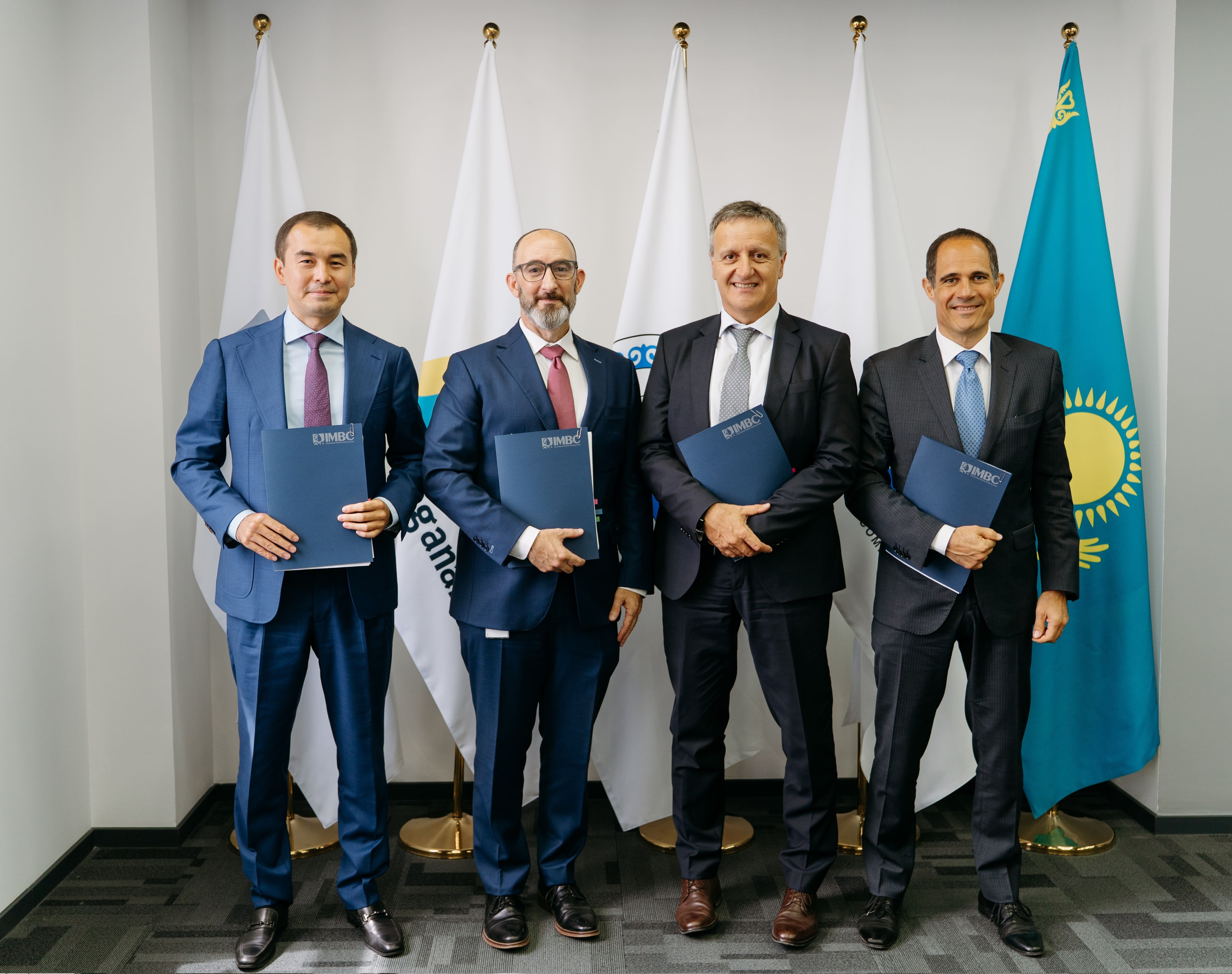
IMBC brings together government agencies, oil and gas operators, and domestic manufacturers on a single platform, creating the necessary conditions for the development of local production and technology attraction.
One of the significant results of the Center's work is that Kazakhstan manufacturers and investors have gained access to information regarding the commodity needs of major operators and the technical requirements for equipment.
This, in turn, creates "economies of scale". Based on data about the operators' actual demand, enterprises can efficiently plan their production, direct their efforts to high-demand areas, cut costs, and reduce production risks. As a result, the sustainability and predictability of business increase.
The Efficiency of IMBC Is Proven by Tangible Results
The IMBC model is proving its viability in practice. Market confidence in its work is also growing year by year. In 2025, with the support of KazMunayGas, operators of promising projects such as Kalamkas-Khazar Operating, Silleno, and KMG PetroChem joined IMBC. Consequently, the volume of analyzed commodity information increased significantly, allowing for a deep assessment of the demand structure within the country's main projects.
Currently, the issue of attracting new oil and gas operators to IMBC is also being considered. This demonstrates growing confidence in the role of International center in the industry and lays the foundation for further increasing its influence on the oil and gas machine-building sector in Kazakhstan.
What Achievements Have We Attained?
The activities of IMBC are measured by concrete practical results. For the first time, data on more than 120,000 commodities, covering over 80 percent of the direct procurement of the three major operators, were presented to the market. In addition, long-term and high demand from operators was identified for more than 160 types of commodities.
Within studied technical requirements of operators, IMBC specialists visited more than 300 production sites across Kazakhstan and conducted production assessments. As a result, more than 90 enterprises with high potential to manufacture products in accordance with international standards were identified. Taking into account the operators' requirements, production potential development plans were developed for 18 enterprises.
.jpeg)
These efforts also yield concrete economic results. In recent years, based on the commodities analyzed by IMBC, operators have awarded more than 200 contracts and orders for local manufacturers with a total value exceeding 800 million USD.
Moreover, the share of local content in the procurement of major oil and gas projects in Kazakhstan - TCO, KPO, and NCOC - steadily increased from 9 percent to a level above 16 percent.
These results can be attributed to the systematic and coordinated work of government authorities, Authorized body "PSA", major operators, manufacturers, and IMBC.
Quality and Safety – The Ultimate Criterion
Compliance of enterprises with high technical requirements is crucial for participation in complex oil and gas projects. In particular, full compliance with international standards for oil and gas equipment used in hazardous production environments is one of the core requirements.
These requirements are especially critical for highly complex fields. Therefore, obtaining international certificates such as ASME, API, and IEC is not just a formality or a documentation requirement. It is an obligation to manufacture products matching international standards to ensure safe production. At the same time, it is precisely due to holding these certificates that the path to participating in major oil and gas projects and long-term contracts opens up for enterprises.
However, reaching such a level is not easy. A number of systemic difficulties still persist in the sector. These include insufficient engineering support, the high cost of production modernization, technological gaps, a shortage of qualified personnel, and limited access to modern technologies.
Resolving these issues requires substantial investment in upgrading equipment, improving production processes, and training personnel. However, not all enterprises are willing to take such risks for the sake of long-term development. Consequently, the growth rate of the sector is constrained to a certain extent.
Supporting Domestic Product Manufacturers
State support measures aimed at developing the machine-building sector are being widely implemented in Kazakhstan. In this direction, systematic work is being conducted by QazIndustry, the Industrial Development Fund, and other development institutions. Additional opportunities are offered to enterprises through special economic and industrial zones. Here, the necessary infrastructure as well as various tax incentives are provided for production sites.
IMBC also plays an active role in this area. Specifically, as a result of joint work with the QazIndustry organization, the volume of state reimbursement for international certification costs was increased fivefold upon IMBC's initiative. While previously this support was limited to 3,000 monthly calculation indices, today it has reached 15,000 monthly calculation indices. This translates to financial support of approximately 65 million tenge, or nearly 140,000 USD. This represents a significant opportunity for enterprises striving to obtain an international certificate.
Furthermore, IMBC is participating in the implementation of the Comprehensive Plan for the Development of the Machine-Building Industry of the Republic of Kazakhstan for 2024–2028.
One of the critical directions of the Center's activity is a deep analysis of the production potential of enterprises.
Based on the results of the study, IMBC specialists comprehensively evaluate production processes and identify gaps that do not meet operators' requirements and international standards. Following this, specific recommendations are developed, aimed at production modernization, international certification, improving quality management systems, and enhancing manufacturing competencies.
Such reports allow enterprises not only to identify their weaknesses but also to chart a path of development in line with international requirements. Therefore, this approach is becoming one of the essential tools for increasing the capacity of local manufacturers.
Nevertheless, the ultimate goal of developing the industry is not just to supply the domestic market. One of the main tasks is to create conditions for Kazakhstan products to be exported and integrated into global supply chains. This opens up opportunities to form a competitive industrial base meeting international standards.
In this direction, IMBC, together with the QazTrade organization, is working on forming a pool of domestic manufacturers who have proven their competitiveness in the course of working with major operators and meet international requirements.
Another important initiative is the creation of laboratory testing centers to conduct tests in accordance with international standards. IMBC is working closely with state institutions in the field of certification and technical regulation in this direction. The emergence of international-level testing laboratories in Kazakhstan will make it possible to transform the country into a leading regional center in the field of industrial certification.
This will not only elevate the quality of domestic production but will also strengthen Kazakhstan's place on the international industrial map.
A New Stage of Technology Transfer
One of the key areas of IMBC's activity is attracting investment to Kazakhstan and developing technology transfer. The mechanism for this work is structured precisely and systematically. Potential investors and international manufacturers prepare proposals for localizing production. Later, these proposals are reviewed jointly with oil and gas operators, cross-referenced with demand volumes for specific goods, and the economic potential of opening production is evaluated.
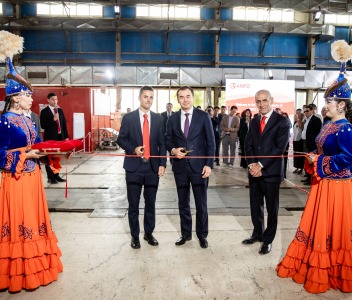
For today, 52 proposals have been prepared in this localization direction. Through this approach, a number of successful production projects have been implemented in Kazakhstan. These include localization projects for the production facilities of companies such as Honeywell (USA), WIKA (Germany), Beruseal (South Africa), PetrolValves (Italy), and Slb (USA).
Currently, negotiations with other international companies are ongoing. This indicates a growing interest in Kazakhstan as a production and industrial platform.
The significance of such projects is not limited to just opening new production facilities. They contribute to technology transfer, the mastery of international experience, and raising the production culture of local enterprises to a new level.
Oil and Gas Machine Building - A Source of Multiplier Growth
The oil and gas machine-building sector can become a multiplier factor affecting the development of not just a single sector, but the entire industrial ecosystem. This industry gives momentum to the development of related areas such as metallurgy, the chemical industry, logistics, and engineering. The opening of new production facilities increases the demand for qualified specialists, paving the way for the development of technical education and scientific research.
That is to say, investments made in the oil and gas machine-building sector affect not only the development of individual enterprises but also trigger a qualitative transformation of the entire national economy.
Digitalization - A Platform of New Opportunities
The next important direction of IMBC's work is the introduction of digital tools. This year, Center plans to launch an online platform of studied and verified domestic product manufacturers.
This platform will enable manufacturers to directly post information about their products and production capabilities. In turn, operators of major oil, gas, and petrochemical projects will gain prompt access to data on domestic manufacturers capable of manufacturing products according to international standards.
The launch of the online platform is being carried out as part of the initiative of the President of the Republic of Kazakhstan, Kassym-Jomart Tokayev, to introduce modern IT solutions into the industrial sector.
Such digital solutions reduce one of the main barriers in the market – the structural gap between demand and supply. In addition, it eliminates information inequality, making the interaction between market participants transparent and efficient. As a result, both manufacturers and operators can rely on accurate and up-to-date information when making decisions.
The Forum - A Growth Point for the Industry
Direct dialogue between market participants is crucial for the development of any industrial sector. To this end, large platforms dedicated to the oil and gas machine-building sector have been forming in Kazakhstan in recent years.
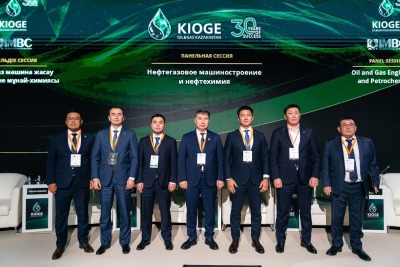
In 2024, the Oil and Gas Machine Building Forum and the Operators' Open Day were held in the city of Atyrau. During the event, oil and gas operators presented the commodities they purchase and signed memorandums on expanding cooperation with domestic manufacturers. Later, a significant part of these documents led to actual contracts.
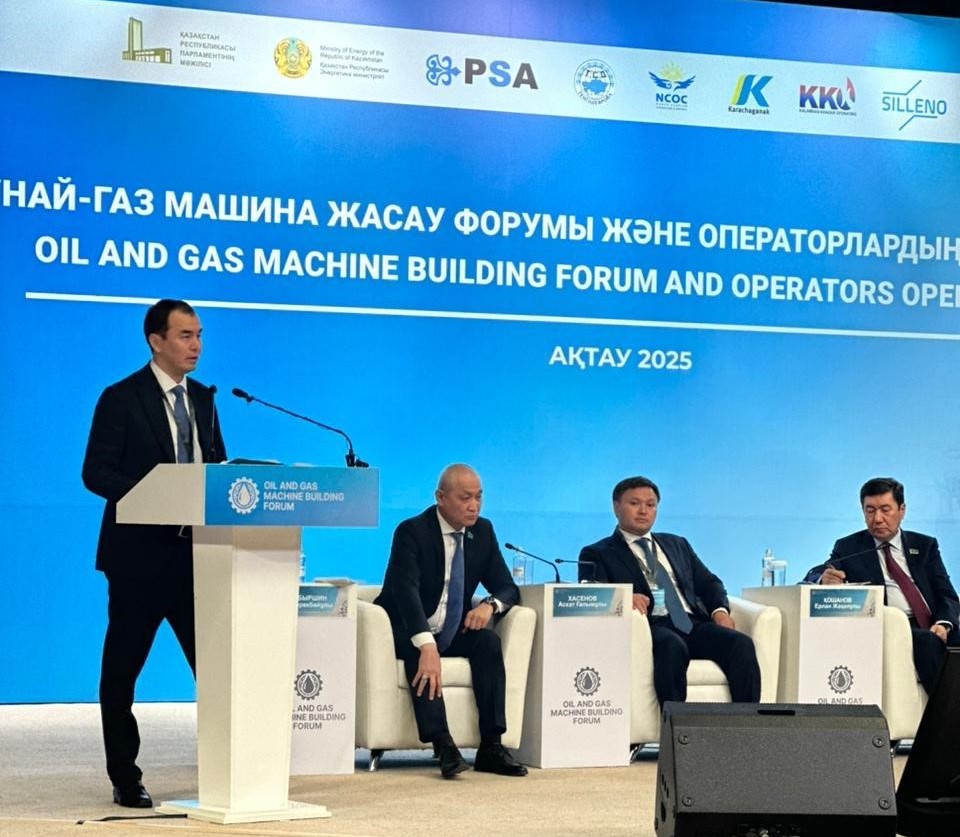
The Oil and Gas Machine Building Forum and Operators' Open Day held in Aktau in October 2025 became a continuation of this work. Representatives from various sectors, including Kazakhstan and foreign companies, participated in the forum.
During the event, more than 100 technical specialists from operators held B2B meetings, presented electronic catalogs of high-demand commodities along with their technical specifications, and answered participants' questions. The forum provided Kazakhstan manufacturers with an opportunity to exhibit their products and establish direct contacts with potential partners. As a result, 33 contracts with a total value exceeding 440 million USD were signed.
Conclusion: The Road to Industrial Independence
In current geopolitical and economic conditions, industrial independence is not a choice, but a strategic necessity. For Kazakhstan, one of the key sectors in this direction is oil and gas machine building.
As the activities of IMBC have shown, tangible results can be achieved when state policy, major operators, and local business join forces. The development of domestic production, the introduction of international standards, and the attraction of new investments are strengthening Kazakhstan's industrial potential.
Most importantly, this work is not just aimed at meeting current demand. It strengthens Kazakhstan's position in global supply chains and opens the way to forming a competitive industrial base that meets international requirements. Therefore, the new industrial ecosystem being shaped by IMBC is not just a collection of separate projects; it is a long-term strategic direction leading to Kazakhstan's industrial independence.